Our Team in Mongolia

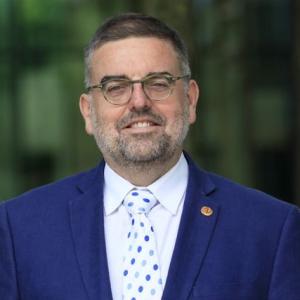
Jaap van Hierden, Resident Coordinator

Jaap van Hierden

UN
Resident Coordinator
Mr. Jaap van Hierden of The Netherlands was appointed as the United Nations Resident Coordinator in Mongolia, with the host Government’s approval, on 1 January 2025. Mr. van Hierden has more than 30 years of experience in development, humanitarian action, and peacebuilding, including establishing, managing and leading offices and projects and strategic, policy, operational, managerial, and coordination roles and responsibilities. Most recently he served as the first UN Resident Coordinator of the new UN Multi-Country Office in Micronesia hosted by Pohnpei/Federated States of Micronesia (FSM) supporting Palau, FSM, Marshall Islands, Nauru and Kiribati. In this capacity, he led the UN Country Team to ensure their support to achieve national development goals. From 2018 to 2021 he worked with Cordaid in Afghanistan. He worked with UNOPS in the Philippines and Cambodia from 2013 to 2016 and for UNOPS in various roles in Copenhagen, New York, Kuala Lumpur and Bangkok from 1995 to 2013. He worked for UNDP in Bangkok in 1994, and from 1991 to 1993 he served in Sierra Leone with the United Nations Capital Development Fund (UNCDF). Mr. van Hierden holds a master’s degree in Agricultural Economics from Wageningen University. He is married with three adult children and one teenager.
Benedikt Hofmann

Benedikt Hofmann

UNODC
Regional Representative ad interim for Southeast Asia and the Pacific


Benedikt Hofmann took up his functions as UNODC Deputy Regional Representative for Southeast Asia and the Pacific based in Bangkok, Thailand, in September 2023 and currently served as Regional Representative ad interim. Prior to this, he was UNODC’s Head of Office in Myanmar, responsible for all UNODC programming and operations in the country. Previously he served in the Office of the Director, Division for Operations, in UNODC Vienna headquarters, where he focused on strategic programme planning, enhancing UN partnerships, and strengthening impact of UNODC field operations around the world. Before that, he supported UNODC’s programme development and management in Eastern Africa, as well as the Middle East and North Africa region. In 2015 and 2016, Benedikt was on an earlier assignment in the UNODC Regional Office for Southeast Asia and the Pacific in Bangkok, leading monitoring, and reporting on UNODC’s regional activities covering organized crime, illicit trafficking, as well as challenges related to drug abuse and terrorism. Before his time in Bangkok, he had served in various capacities with the UNODC Headquarters, covering programmes in Africa, the Middle East, as well as Afghanistan and the surrounding region. A national of Austria, Benedikt has been with UNODC for more than 10 years.
Atsuko

Atsuko Okuda

ITU
Regional Director, ITU ROAP
 
 
Atsuko Okuda is the Regional Director of the International Telecommunication Union (ITU), for Asia and the Pacific. Ms. Okuda has several years of professional and leadership experience in the field of ICT and development working with different UN organizations. Prior to joining ITU, she was the Chief of the ICT and Development Section of the United Nations Economic and Social Commission for Asia and the Pacific (ESCAP), in Bangkok, Thailand where she promoted the development of regional broadband connectivity through the implementation of the Asia-Pacific Information Superhighway (AP-IS) initiative. Ms. Okuda has also worked with the United Nations Economic and Social Commission for Western Asia (ESCWA) in Beirut, UNHQ, the United Nations Economic Commission for Africa (ECA) and the UNDP Country Office in Bhutan.
Okuda obtained a BA from Kyoto University (Japan), M.A. from Helsinki University (Finland) and a PhD from the United Nations University – Maastricht Economic and Social Research Institute on Innovation and Technology (Netherlands).

Beate Dastel, UNICEF Rep

Beate Dastel

UNICEF
Representative
Beate Dastel joined UNICEF Mongolia as Representative in February 2026, following her tenure as UNICEF Representative in Djibouti from 2022 to 2025.
Ms. Dastel brings over 23 years of experience in international development and strategic planning. She previously served as UNICEF Deputy Representative in Vientiane, Lao PDR, and in Thimphu, Bhutan, where she led the development of new Country Programmes of cooperation. She began her UNICEF career in 2010 as a Monitoring and Evaluation Specialist in Pristina, Kosovo, and later moved to Bujumbura, Burundi, in 2014 as Chief of Planning and Monitoring.
Prior to joining UNICEF, Ms. Dastel worked as a research analyst at the Institute of Urban and Regional Research of the Austrian Academy of Sciences and at a business consulting firm. She also served as a consultant for the United Nations Industrial Development Organization (UNIDO) and as a project manager for the European Forum Alpbach. Ms. Dastel is an Austrian national. She holds a master’s degree in natural sciences from the University of Vienna and a postgraduate diploma from the Diplomatic Academy of Vienna (School of International Studies). She is fluent in English, French, and German, her native language.
ILO Chang Hee Lee

Changhee Lee

ILO
Country director
Dr. Changhee LEE is appointed as Director of ILO Country Office for China and Mongolia, effective from July 1, 2021. He joined ILO HQ in Geneva in 1996 where he participated in a number of major global research programme on industrial relations. Subsequently he worked as an industrial relations specialist of the ILO’s East Asian team in Bangkok covering South East and North East Asia (2000-2006) and in Beijing covering China, Mongolia and Viet Nam (2006-2012) During his service in East Asia, he provided policy advices to tripartite industrial relations actors in East Asia on a wide range of industrial relations policy issues. In 2012, he returned to ILO HQ in Geneva and worked as a senior policy analyst of the Policy Integration Department, and a senior labour relations specialist at the Inclusive Labour Markets, Labour Relations and Working Conditions Branch (INWORK). He was also a member of the Task Force for reform of ILO’s field operation, appointed by the Director-General. He worked as a Director of ILO Country Office for Viet Nam since September 2015 until his recent appointment of Country Director of ILO Country Office for China and Mongolia on July 1, 2021. Chang-Hee Lee is a citizen of the Republic of Korea. He has a Ph.D of sociology from Seoul National University (1996), and he worked as a research fellow (1993-95) and a visiting professor (2010) at the Institute of Social Sciences, Tokyo University, Japan. He has numerous articles published on industrial relations and human resource management on international academic journals. He co-edited a book “Industrial Relations in Emerging Economies – Quest for Inclusive Development” (Elgar, 2018).
pic Christina Hainzl

Christian Hainzl

UNV
Regional Manager, Regional Office for Asia and the Pacific
Mr. Christian Hainzl is the Regional Manager and Head of Office of the UNV Regional Program for Asia and the Pacific. He took up his assignment in September 2023. He brings to the role more than 25 years of experience in program management, strategic leadership, and policy advice. His professional expertise and leadership path include a broad range of development and management areas, including human rights, governance, decentralization, community-driven development, peacebuilding and social cohesion, volunteerism, and civil society support. Previously, he served as the UNV Regional Manager for the Arab States where he successfully expanded the UNV services in Northern Africa and the Middle East. He also headed UNDP's governance and local development programmes in countries in transition in Eastern Europe (Bosnia and Herzegovina) and South-East-Asia (Myanmar). Mr. Hainzl served also at the UNV headquarters (Bonn, Germany) where he managed host-country relations and the joint UN agency's premises. In his earlier career, he worked as a senior researcher at the Ludwig Boltzmann Institute of Human Rights, University of Vienna, where he completed a Ph.D. in law and functioned as an advisor to the Austrian Ministry of Foreign Affairs. Mr. Hainzl holds a master’s degree in law from the University of Graz, Austria, and a postgraduate diploma in International Relations from Johns Hopkins University School of Advanced International Studies (SAIS). It is for him a privilege to serve in the Asia-Pacific region to promote UN volunteer solutions and opportunities with UN agencies, funds and programmes, Government partners, and the private sector in support of Agenda 2030. Christian is married and has two children.
Christine Arab

Christine Arab

UN Women
Regional Director for Asia and the Pacific
 
 
Christine Arab has dedicated over 25 years to advancing gender equality and women’s human rights within the UN System, working across Asia, the Pacific, the Arab States, the Caribbean, the Balkans and the Southern Caucasus. Ms. Arab has served as a UN Women Country Representative in Egypt, the Multi-Country Office in the Caribbean, and the Albania Country Office. She has held the position of Chief of the Asia-Pacific Section at UN Women HQ and was an advisor on the Executive Director’s Transition team during the establishment of UN Women. Additionally, she has headed UN Women (formerly UNIFEM) offices in the Southern Caucasus and Afghanistan and has worked in former sub-regional offices and at HQ as a programme specialist for the Pacific, Asia, the Arab States, Central Asia and Europe. Ms. Arab has been a senior technical consultant to the UN in South Asia and Southeast Asia, focusing on strategic planning, partnership development and supporting the normative agendas on gender equality and women’s empowerment. Ms. Arab holds a Master of Arts in International Relations/Political Science from Dalhousie University, Halifax, Canada.
Dechen Tsering Regional Director and Representative for Asia and the Pacific

Dechen Tsering

UNEP
Regional Director and Representative for Asia and the Pacific


Eamonn

Eamonn Murphy

UNAIDS
Regional Director for Asia and Pacific
 
Eamonn Murphy leads UNAIDS’ efforts in promoting an expanded and integrated United Nations system response to HIV at the country and regional levels for Asia Pacific and Eastern Europe and Central Asia regions. Previously Mr Murphy was Deputy Executive Director, Programme a.i. Until October 2021, Mr Murphy was Regional Director for Asia and the Pacific, where he supported countries across the region in achieving the goals outlined in the United Nations Political Declaration on Ending AIDS as well as the Global AIDS Strategy. Prior to that, Mr Murphy was the UNAIDS Country Director in Myanmar, where he supported Myanmar’s significant scale-up of services and helped to create an enabling environment and overcome legislative obstacles. He also served in Viet Nam as UNAIDS Country Director, where he was honoured with the Order of Friendship by the President in 2010 in recognition of his commitment to the people of Viet Nam. He also served in UNAIDS Global Centre as Director of Governance, United Nations System and Donor Relations, and as the first UNAIDS Country Coordinator in Myanmar. Before joining the United Nations in 2002, Mr Murphy held several senior positions with the Australian Government, including Director for Health Sectors with AusAID in the Foreign Ministry, as well as Head of the Communicable Diseases and Environmental Health Branch and Director of the National AIDS Programme for the Commonwealth Health Department.
Dr. Ganbold Baasanjav

Ganbold Baasanjav

UN ESCAP
Head of East and North-East Asia Office
 
Dr. Ganbold Baasanjav is the Head of United Nations Economic and Social Commission for Asia and the Pacific (UN ESCAP) East and North-East Asia Office based in Incheon, Republic of Korea. Prior to UNESCAP, Dr. Ganbold has worked extensively for the government of Mongolia serving within the country in the Foreign Ministry as well as abroad in a diplomatic capacity. He was most recently the Ambassador-at-large for Sustainable Development at the Ministry of Foreign Affairs of Mongolia (2018-2019). Prior to this, he has served as the Mongolian Ambassador to the Republic of Korea (2013-2018), Director-General of the Asia and the Pacific Department at the Ministry of Foreign Affairs of Mongolia (2008-2013), and the Mongolian Ambassador to Vietnam (2004-2008). Dr. Ganbold has also served as the State Secretary of the Ministry of Foreign Affairs of Mongolia (2001-2003) and as the Director-General of the Public Affairs Department at the Ministry of External Relations of Mongolia (1998-2000). His earlier career includes overseas diplomatic assignments with the Mongolian Embassy in Pyongyang, DPR of Korea (1989-1993). Dr. Ganbold was also a part-time lecturer and Dean for the Department of International Relations, School of Foreign Service, at the National University of Mongolia (1997-2001). Dr. Ganbold is fluent in English, Korean and Russian, and earned his BA in International Relations from Moscow State Institute of International Relations (MGIMO), Russia an MA in Political Science from University of Hawaii at Manoa, USA and a PhD in Law from Hankuk University of Foreign Studies, Republic of Korea. He is married with four children.
Hai Kyung Jun

Hai Kyung Jun

UNHCR
Regional Director for Asia and the Pacific, UNHCR 


Ms. Hai Kyung Jun, with over 20 years of experience in refugee and humanitarian work, is the UNHCR Regional Director for Asia and Pacific, based in Bangkok, Thailand, assuming this position in February 2024. Prior to this, she was the UNHCR Representative in Korea from November 2022 to January 2024. She joined UNHCR in 2001 as Associate Fundraising Officer and Donor Relations Officer at UNHCR Headquarters in Geneva, Switzerland. She then went on to serve as Donor Relations Specialist at the UNICEF Office for Japan and the Republic of Korea based in Tokyo, Japan until 2009 before assuming the position of Senior Advisor in the Multilateral Affairs Division at UNICEF Headquarters, based in New York. In 2012, she subsequently served as Special Advisor at the Regional Bureau for Asia and the Pacific at UNHCR Headquarters and as Assistant Representative (Program) for UNHCR in Afghanistan from 2013 to 2014. She also then worked as UNICEF Representative in Santiago, Chile for four years until 2018 and as Director and Secretary of the UNICEF Executive Board at UNICEF Headquarters before assuming her assignment as UNHCR’s Representative in Myanmar in 2020. She holds a B.A. in Political Science (International Relations) from Seoul National University of the Republic of Korea. She later received a master’s degree (Master of Science) in Political Science from the Massachusetts Institute of Technology in the United States of America.
Jing Pacturan, Country Director for Pakistan, Iran and Mongolia

Jing Pacturan

IFAD
Country Director for Afghanistan, Iran, Mongolia and Papua New Guinea
 
Jerry “Jing” Pacturan. Jing started in rural development in the mid-1980s working with NGOs providing support for artisanal organizations of farmers and fisherfolks in various parts of the Philippines. He taught entrepreneurship formation at the Xavier University-Ateneo de Cagayan with trainees from different parts of Southeast and South Asia and the Pacific. He headed a national NGO in the Philippines (www.pdap.net) and had a brief stint for 4 years as Undersecretary (Vice Minister) of the Philippines Department of Agrarian Reform (DAR).
In September 2016 he joined the International Fund for Agricultural Development (IFAD) as Country Programme Officer covering the Philippines and Myanmar portfolios. In January 2022, he was appointed as IFAD Country Director for four countries in the Asia Pacific Region (APR) Division of IFAD namely Afghanistan, Iran, Papua New guinea and Mongolia. He also manages the European Union-IFAD financed grant projects for farmers organisations in 13 APR countries including Mongolia. He finished Sociology at the Xavier University-Ateneo de Cagayan and took courses at the Asian Institute of Management in Makati, Philippines; the Boulder Microfinance Institute at Turin, Italy; and, at the Harvard Kennedy School of Government, USA.
Khalid Sharifi

Khalid Sharifi

UNFPA
Head of Office
Khalid Sharifi, an Afghan national, is a Medical doctor, who graduated from Kabul Medical University. He holds a Master’s Degree in Public Health from Royal Tropical Institute/VU University in Netherlands and Post Graduate Diploma in Health Care Management from the Swiss Tropical and Public Health Institute/Basel University in Switzerland. Khalid Sharifi has been serving the UNFPA since 2015 in various roles, including Planning, Monitoring, and Evaluation Specialist in UNFPA Afghanistan, UNFPA Assistant Representative in Afghanistan and Deputy Representative a.i in the absence of the Deputy Representative. Before joining the UNFPA, he has served in Afghan NGOs in implementing the Primary and Secondary Health Care program in Afghanistan in the capacity of Managing Director, Health Director, and Program Manager for more than ten years. In addition, Khalid has worked in the International Federation of Red Cross and Red Crescent Societies (IFRC) and the Afghan Red Crescent Society for nine years. Khalid also practiced clinical medicine at Kabul National Hospitals for four years as a pediatrician. Operational research is a favorite field of work for Khalid. During the past 15 years, Khalid participated as a principal/co-researcher in Afghanistan's public health operation research/program evaluation series. He contributed to public health research of Afghanistan as a member of the national Institutional Review Board (IRB). Khalid brings 22 years of experience leading and administering development and humanitarian operations from grassroots to the national level. Driven by the power of data, he is passionate about using evidence-based results to conduct public advocacy and high-level policy dialogue to influence decision-makers on the necessity of reproductive and sexual health, reproductive rights, youth development and gender equality for sustainable development.
Marco Toscano-Rivalta

Marco Toscano-Rivalta

UNDRR
Chief of the Regional Office for Asia and the Pacific


Matilda Dimovska

Matilda Dimovska

UNDP
Representative
Ms. Matilda Dimovska assumed the role of UNDP Resident Representative in Mongolia as of 4 September 2023. In her role, Ms. Dimovska acts on behalf of the UNDP Administrator and as the head of the Country Office has the overall responsibility for the operational activities of UNDP in Mongolia. Prior to this, she served as UNDP Resident Representative in the Republic of Uzbekistan from 2019 to 2023. During 2016-2019 she led the Country Office Support Team at UNDP Istanbul Regional Hub for Europe and the CIS as of July 2016 and in that capacity, she supported Country and Project Management Offices in the region. She also served as Deputy Resident Representative of UNDP in Turkey (2012-2016), Deputy Resident Representative of UNDP in Moldova (2008-2012) and Assistant Resident Representative of UNDP in Georgia (2006 -2008). A citizen of the Republic of North Macedonia, Ms. Dimovska previously worked for UNDP in New York and her home country. Prior to UNDP, she served as a Representative to UNIDO Investment Promotion Service in Vienna and worked for the Macedonian Privatization Agency and the private sector in Skopje. Ms. Dimovska holds Master’s degree in Economic Policy and Development from “St. Cyril and Methodius” University in Skopje.
Nicholas George

Nicholas George

UNOPS
Deputy Regional Director for Asia and the Pacific
 
 
Nicholas George is the Director of the United Nations Office for Project Services (UNOPS) for the Southeast Asia and Pacific Multi-Country Office. Since joining UNOPS in 2008, Mr. George has held several senior leadership positions, including Deputy Regional Director for Asia Pacific, Country Director in Myanmar and later Afghanistan, Director of the Washington Liaison Office, and Global Head of Communications. Prior to joining the UN, he spent 20 years in print and broadcast journalism with among others, The Financial Times and The Economist. Mr. George holds degrees from the University of Manchester and the London School of Economics and Political Science.
Ms. Qingyun Diao

Qingyun Diao

FAO
Representative
 
Ms. Qingyun Diao has been serving as the FAO Representative in Mongolia since June 2025. Prior to this, she was the FAO Representative in Namibia from 2023 to 2025, where she led FAO’s response to national priorities and sustainable development challenges in alignment with the 2030 Agenda and FAO’s Strategic Framework. In Namibia, she supported the Government in developing policies and programmes to advance food security, reduce hunger and malnutrition, and promote sustainable management of agricultural, fisheries, forestry, and natural resources. She also oversaw the management of country office personnel and finances, introducing innovations in recruitment and consultancy. From 2018 to 2023, Ms. Diao served as the First Secretary and Chief of Agricultural Office at the Embassy of China in Mexico, where she became the country’s first agricultural diplomat. She successfully built strong relationships with government entities, local institutions, and associations, and promoted bilateral cooperation in agriculture, fisheries, and related fields, resulting in significant advancements in China–Mexico agricultural collaboration. Prior to her diplomatic service, Ms. Diao held senior scientific leadership positions at the Chinese Academy of Agricultural Sciences (CAAS) in Beijing. As Chief Scientist from 2015 to 2021, she led the Innovation Group, introducing advanced management and cooperation models that earned national recognition, including the Institute of Apicultural Research’s consecutive annual awards (2015–2019). She also guided her team to become one of the top ten Women Pacesetter Groups of CAAS. From 2014 to 2022, she was Director of International Cooperation Projects at the Institute of Apicultural Research, overseeing collaborative research initiatives and partnerships. Ms. Diao holds a PhD and MSc in Entomology from China Agricultural University, Beijing, and a BSc in Entomology from Beijing Agricultural University. A national of China, she is fluent in Chinese and English, with intermediate proficiency in Spanish.

Rakhi Sinha Todorovic

UNDSS
Regional Security Advisor


Roi Chiti

Roi Chiti

UN-Habitat
Multi-Country Coordinator
 
 
Roi Chiti is an Italian national, holding a degree in Architecture and Urban Planning, a MA in “Development and International Aid” and a Msc in “Land Use and Water Management”, in addition to other specializations in the field of human settlements planning and management. Since the late 90’s Mr. Chiti has been coordinating and implementing urban development and renewal projects in Italy and Latin American countries within European Union’s city networks and projects. At the Italian Ministry for Foreign Affairs– Department of Development Cooperation (2006-2009) he led integrated development programs on urban infrastructure and basic services in South Sudan and the coastal province of Kenya. Joined UN-Habitat in 2009 as Kenya Chief Technical Advisor at the Regional Office for Africa and in 2012 he moved to the External Relations Division, where he coordinated the substantive programme of three editions of the World Urban Forum (WUF), the premier global platform on sustainable urban development. Between 2014 and 2017, Mr. Chiti was seconded to the Habitat III Secretariat, to lead the UN drafting team of the New Urban Agenda and coordinate all the relevant knowledge and policy dimensions feeding into its final formulation. In 2019, he moved to Latin America initially as Coordinator of Regional and UN Interagency frameworks and later supporting the establishment of the UN-Habitat Multi-Country Office for the Andean region, which he led until 2025. Since June 2025, he is the UN-Habitat Multi-country Coordinator in charge for Mongolia from the Regional Office for Asia and the Pacific, based in Japan.
Rory Mungoven

Rory Mungoven

OHCHR
Chief of the Asia and Pacific Region
 
Mr Rory Mungoven is Chief of the Asia-Pacific Region with the Office of the High Commissioner for Human Rights. From 2004 to 2007, he served as Senior Human Rights Advisor (UNDP) with the Resident Coordinator’s Office in Sri Lanka during the peace process and post-tsunami response. From 2016 to 2019, Mr Mungoven served as the country representative for ILO and developed the first ever Decent Work Country Programme in Myanmar. On behalf of the Resident Coordinator, he co-chaired the Cooperation Partners Group in Myanmar, and led inter-agency working groups under the “people and planet” pillar of the first UNDAF in Myanmar. Prior to joining the UN System in 2004, Mr Mungoven worked as an Australian diplomat, posted in Namibia and Pakistan, and as an advisor in the Prime Minister’s department. Mr Mungoven obtained his Master’s degree in Applied Anthropology and Participatory Development from the Australian National University and an honours degree in history from the University of Sydney.
UNESCO Shahbaz Khan

Shahbaz Khan

UNESCO
Representative to DPRK, Japan, China, Mongolia, and the ROK
 
 
Professor Shahbaz Khan (Australian) is the Director of the UNESCO Office in Beijing and UNESCO Representative to the Democratic People’s Republic of Korea, Japan, Mongolia, People’s Republic of China, and the Republic of Korea. Prof Khan joined UNESCO in 2008 at its Headquarters as Chief of the Water and Sustainable Development Section. Then he served as the Director of the Regional Bureau for Sciences in Asia and the Pacific in Jakarta, Indonesia, and UNESCO Representative to Indonesia, Brunei Darussalam, Malaysia, the Philippines and Timor-Leste (2015-2021). Prof Khan has worked in Australia, France, Indonesia and Pakistan in various research, consultancy and policy positions. Before joining UNESCO, he was Professor and Director at the Charles Sturt University (Australia). His work has been widely recognized e.g. 2019 China Friendship Award, Great Wall Friendship Award China 2017, FEIAP Engineer of the Year Award 2016, UNESCO Team Award for Managing Hydro Hazards 2009, Land and Water Australia’s Eureka Prize 2007, CSIRO Medal 2007, Biennial Medal of the Modelling and Simulation Society of Australia and New Zealand. Prof Shahbaz Khan is currently an Adjunct Professor at the University of Canberra and Western Sydney University (Australia), Adjunct Professor at the Lincoln University (New Zealand), Distinguished Professor at the National University of Science and Technology (Pakistan) and Distinguished Professor at the Capital Normal University (China). Professor Shahbaz Khan holds a Bachelor of Science (Honours) degree in Civil Engineering (1990) from the University of Engineering and Technology, Lahore (Pakistan), a Master of Science degree in Water Resources Technology and Management (1992) and a Doctorate in Civil Engineering (1995) from the University of Birmingham (United Kingdom). He also holds a Master’s degree in International Environmental Law (2005) from Macquarie University (Australia) and a Master’s degree in Applied Environmental Economics (2007) from Imperial College London (United Kingdom) as well as a Hon Doctorate Environment and Development from the National University of Malaysia (2016) Hon DSc from the University of Birmingham (2018).
Escalante

Socorro Escalante

WHO
Representative
Dr Socorro Escalante, MD, MBA, assumed her duties of WHO Representative in Mongolia on 02 January 2023. Prior to this assignment, Dr Escalante served as a Team Coordinator of Universal Health Coverage at WHO Country Office in Vietnam. From 2017 to 2022, Dr Escalante worked as a Coordinator of Essential Medicines and Technologies at Office for the Western Pacific. Dr Escalante started her service in WHO in 2006 as a Programme Officer of Pharmaceuticals. Prior to working with WHO, Dr Escalante was a Provincial Board Member at the Provincial Government of La Union, Philippines, and then Medical Specialist at the Department of Health – Regional Office in La Union, Philippines. Dr Escalante graduated from the Saint Louis University in Philippines as a Doctor of Medicine. She holds MBA in Health from the Ateneo de Manila University in Makati, Philippines. Dr Socorro Escalante speaks English and Filipino and is a national of the Republic of the Philippines. 
Sylvie Bétemps Cochin

Sylvie Bétemps Cochin

ITC
Senior Trade Promotion Officer, Office for Asia and the Pacific
Sylvie Bétemps Cochin is Senior Trade Promotion Officer, Country Manager for Mongolia, within the Office for Asia and The Pacific, at the International Trade Centre (ITC). Sylvie Bétemps Cochin has more than 20 years of experience in international trade, project management and trade-related technical assistance in Asia and Africa. She is responsible for a portfolio of 14 Asian countries, including least developed countries (LDCs), for which she leads country coordination and client relationships. She has managed and developed multi-disciplinary trade-related technical assistance projects in Asia and Africa. She was also responsible for managing regional initiatives, supporting south-south trade promotion, institutional strengthening and the competitiveness of small and medium sized enterprises (SMEs).
Yoko Fujimura

Yoko Fujimura

IOM
Chief of Mission
Dr. Yoko Fujimura is the Chief of Mission for the International Organization for Migration (IOM) Country Office in Ulaanbaatar, Mongolia. Expert in peacebuilding and socio-economic recovery in the post-war context, Dr. Fujimura brings over 20 years of experience in durable solutions, peacebuilding, and mission leadership across Africa, Asia, and the Middle East. She most recently served as Head of Office in Erbil, where she led large, diverse teams and managed complex donor and government relationships, and previously coordinated durable solutions strategies in Iraq. Her earlier roles in Kenya, Tanzania, and Chad focused on community stabilization, Disarmament, Demobilization and Reintegration (DDR), and reintegration. With a strong academic and legal background, alongside extensive field leadership, Dr Fujimura brings analytical expertise and practical experience. She holds a PhD in Social Sciences from Universiti Sains Malaysia, Penang.
Zhao Jie

Zhao Jie

UNIDO
Chief of the Regional Coordination Bureau for Asia and the Pacific


Mr. Zhao Jie serves as the Chief of the Regional Bureau for Asia and the Pacific (ASP) region, part of the Directorate of Global Partnerships and External Relations at the United Nations Industrial Development Organization (UNIDO). Additionally, he is the coordinator for UNIDO’s work on the Small Island Developing States (SIDS) and takes on the role of Officer-in-Charge of the UNIDO Sub-Regional Office in China, Country Office in Laos, as well as the Country Office in Iran. Within the ASP region, Mr. Zhao effectively leads 12 field offices, steering their collective efforts to implement UNIDO's mission and instigate positive change. His coordination function extends across 33 Member States, showcasing a steadfast dedication to fostering economic growth and innovation in the diverse nations of the ASP region. Furthermore, Mr. Zhao spearheads key initiatives such as UNIDO’s flagship event “Bridge for Cities”, coordinates the organization’s involvement in the “China International Import Expo”, oversees the operations of the UNIDO Centre for South-South Industrial Cooperation, and manages projects aimed at promoting inclusive and sustainable development through industrial parks. In this role, he plays a pivotal part in developing the UNIDO Industrial Park Platform and contributes to significant publications such as the "International Guidelines for Industrial Parks". Prior to his current role, Mr. Zhao served as the Special Assistant to the former Director General (DG) of UNIDO, overseeing the Office of the DG from 2013 to 2014. Subsequently, he coordinated the organization’s efforts on South-South and Triangular Industrial Cooperation. Mr. Zhao holds a degree of Master of Science in the specialism of Development Management. With an extensive professional background spanning over 22 years, Mr. Zhao specializes in diverse areas, including Free Trade Agreement (FTA), South-South and Triangular Industrial Cooperation, Special Economic Zone and Industrial Park development, both within the public sector and the development community.